|
Mushroom Plugs for Outdoor Mushroom Growing!
Sustainable - Grow Organic Mushrooms on Logs and Stumps
GMHP, P. O. Box 515 IP, Graton, CA 95444 - -
Plugs for Log and Stump Inoculation
Shiitake, Maitake
(Hen of the Woods), Lion's Mane (Hericium), Reishi,
Oyster Mushrooms: Blue Oyster, Sonoma Brown Oyster
- Cheese Wax
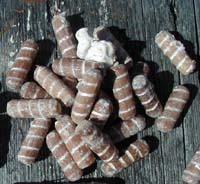
GMHP offers plug spawn of hardy gourmet and medicinal mushroom species: These sterilized birch
plugs are grooved and fully colonized by pure mushroom mycelium, and are
available in packages of approximately 100 or 300 dowels (Shiitake Plug
Spawn is also available in packages of approximately 100, 300, and 1000 dowels).
These Plug Spawn comes complete with user-friendly instructions. All
strains grow & fruit in a wide range of climates. See:
Summary
of Written Instructions
Plugs may be refrigerated for up to 6 months before use. Approximately 100 plugs
are needed to inoculate 3 logs 4 - 6 inches in diameter and 3 to 4 feet in
length.
The best times for cutting the logs
are either in the winter months for spring inoculation or after July 15 for
mid-summer or fall inoculation
Earth Friendly
Organic Mushroom Spawn used to seed these
plugs is Certified Organic by Quality Assurance International
(QAI).
Mushroom plugs produced through methods that integrate cultural, biological, and
mechanical practices that foster cycling of resources, promote ecological
balance, and conserve biodiversity.
You will be
Transferred to a SECURE SITE when you Add To Cart |
Cheese
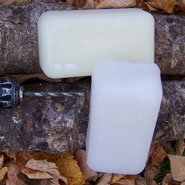
wax is used to seal in the spawn once the log has been inoculated. It can be
dripped on or applied with a small foam brush, baster, cotton daubers or other such
applicators. One pound of cheese wax will cover 8 - 16 logs @ 30 plugs per log:
|
1 lb Cheese Wax
(5 - 10 logs)
$10.95 1 lb |

On a Secure Server
|
|
|
 Shiitake
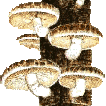
Plugs: Shiitake is perhaps the
most delicious and easiest to cultivate of all the edible medicinal mushrooms, shiitake
is highly esteemed for its medicinal properties. It has been found to reduce
blood pressure, lower cholesterol levels, stimulate the immune system and
have anti-tumor properties. Shiitake
Plugs: Shiitake is perhaps the
most delicious and easiest to cultivate of all the edible medicinal mushrooms, shiitake
is highly esteemed for its medicinal properties. It has been found to reduce
blood pressure, lower cholesterol levels, stimulate the immune system and
have anti-tumor properties.
The logs that will produce the highest yields of shiitake are
deciduous
oaks, chestnut
and ironwood. Many other species will produce yields that are still
satisfactory though not quite as high, such as live oak, sweetgum, bitternut hickory,
alder, ash, eucalyptus, aspen, hard maples (sugar and black), black willow, yellow birch and
river birch. Trees to avoid for shiitake cultivation include conifers, fruit
trees, elm, hackberry, sassafras, soft maples (red and striped), sourwood,
tulip poplar, dogwood, black locust, beech and most of the hickories.
|
|
Genus |
species |
Common
Name |
Number of
Plugs / Product Code |
Price |
|
Lentinus |
Lentinus edodes |
Shiitake
Easiest to Cultivate
• Time from inoculation to fruiting: Varies
from 6 months to 2 years
• Temperature requirements for fruiting:
ranges between 41 to 86 degrees F |
100
ea.
PLUGSH100 |
$21.95
|
|
|
Lentinus edodes |
Shiitake
Easiest to Cultivate
• Type of fruiting body: Size and shape of
caps can be small and flat to large and rounded |
300 ea.
PLUGSH300 |
$33.95
|
|
|
Lentinus edodes |
Shiitake
Easiest to Cultivate
• Color of cap: Tawny to dark brown
• Pick when cap 50 - 80% open |
1000 ea.
PLUGSH1000 |
$58.95
|
 Hericium
Plugs: Lion’s
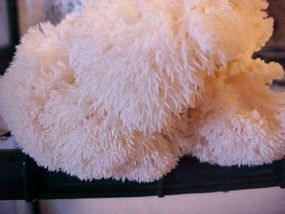
mane is the common name given to a group of mushrooms of the genus Hericium.
Lion’s mane mushrooms have a coral-like shape, with spindly branches
that shoot out from the stem. They are white, pinkish or creamy yellow in color, and are
noted for their fresh crab-like flavor and texture when cooked. Hericium
Plugs: Lion’s
mane is the common name given to a group of mushrooms of the genus Hericium.
Lion’s mane mushrooms have a coral-like shape, with spindly branches
that shoot out from the stem. They are white, pinkish or creamy yellow in color, and are
noted for their fresh crab-like flavor and texture when cooked.
This mushroom will grow on a wide range of hardwood logs or stumps,
including oak, maple, walnut, beech, chestnut and elm. |
|
Genus |
species |
Common
Name |
Number
of Plugs
/Product Code |
Price |
|
Hericium |
Hericium
erinaceus |
Lion’s
Mane - Old Man's Beard
Fairly Easy to Cultivate
• Temperature requirements for fruiting:
ranges between 60 to 75 degrees F |
100
ea.
PLUGLION100 |
$21.95
|
|
Hericium |
Hericium
erinaceus |
Lion’s
Mane - Old Man's Beard
Fairly Easy to Cultivate |
300
ea.
PLUGLION300 |
$33.95
|
| |
species |
Common
Name |
Number
of Plugs
/Product Code |
|
|

|
Pleurotus ostreatus |
Sonoma
Brown Oyster
Fairly Easy to Cultivate
• Temperature requirements for fruiting:
ranges between 55 to 75 degrees F |
100
ea.
PLUGSB100 |
$21.95
|
|
|
Pleurotus ostreatus |
Sonoma
Brown Oyster
Fairly Easy to Cultivate |
300
ea.
PLUGSB300 |
$33.95
|
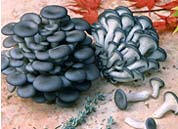 |
Pleurotus
columbinus |
Blue
Oyster
Fairly Easy to Cultivate
• Temperature requirements for fruiting:
ranges between 55 to 75 degrees F |
100
ea.
PLUGBLU100 |
$21.95
|
|
|
Pleurotus
columbinus |
Blue
Oyster
Fairly Easy to Cultivate |
300
ea.
PLUGBLU300 |
$33.95
|
 Maitake
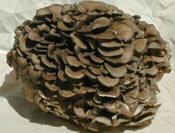
Plugs: Maitake
Mushroom (Grifola frondosa)
Hen of the Woods
may best be known for its cancer-fighting
properties. It contains grifolan, an important beta-glucan polysaccharide
(molecule composed of many sugar molecules linked together). Grifolan has been shown to activate macrophages, a
type of cell consider the " heavy artillery": of the immune system,
explains Larry A. Walker, Ph.D., R.D., author of "Natural products
update," published in Drug Topics, June 1997. D-fraction, one of the
polysaccharides in Maitake mushroom, also energized the cellular immune
system. Maitake
Plugs: Maitake
Mushroom (Grifola frondosa)
Hen of the Woods
may best be known for its cancer-fighting
properties. It contains grifolan, an important beta-glucan polysaccharide
(molecule composed of many sugar molecules linked together). Grifolan has been shown to activate macrophages, a
type of cell consider the " heavy artillery": of the immune system,
explains Larry A. Walker, Ph.D., R.D., author of "Natural products
update," published in Drug Topics, June 1997. D-fraction, one of the
polysaccharides in Maitake mushroom, also energized the cellular immune
system.
Will grow on a wide range of hardwood logs & stumps and some conifers: oak,
elm, maple, sycamore, beech, plum, peach, hemlock, and many others. Logs
may be laid on their side & partially buried. |
|
Genus |
species |
Common
Name |
Number
of Plugs
/Product Code |
Price |
|
Grifola |
Grifola frondosa |
Maitake
Hen of the Woods
May be difficult to cultivate
• Temperature requirements for fruiting:
ranges between 50 to 65 degrees F |
100
ea.
PLUGMA100 |
$21.95
|
|
|
Grifola frondosa |
Maitake
Hen of the Woods
May be difficult to cultivate |
300
ea.
PLUGMA300 |
$33.95
|
Return to Top
 Reishi
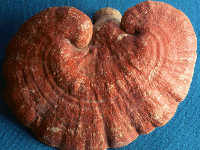
Plugs: The
Reishi mushroom can increase the production of interleukin1 and 2,
resulting in inhibition of tumor growth. Studies show that Reishi can have
a number of other positive effects on the body such as analgesic,
anti-inflammatory, antioxidant, anti-viral (through its interferon
production), lowers blood pressure. It also acts as a cardio tonic by
lowering serum and increasing the production of interleukin 1 and 2, which
results in inhibition of tumor cholesterol, expectorant, anti-tissue,
liver protecting and detoxifying, protection against ionizing radiation,
antibacterial, and anti-HIV activity.
Will grow on a wide range of hardwood logs & stumps and some conifers: oak,
elm, maple, sycamore, beech, plum, peach, hemlock, and many others. Logs
may be laid on their side & partially buried. Reishi
Plugs: The
Reishi mushroom can increase the production of interleukin1 and 2,
resulting in inhibition of tumor growth. Studies show that Reishi can have
a number of other positive effects on the body such as analgesic,
anti-inflammatory, antioxidant, anti-viral (through its interferon
production), lowers blood pressure. It also acts as a cardio tonic by
lowering serum and increasing the production of interleukin 1 and 2, which
results in inhibition of tumor cholesterol, expectorant, anti-tissue,
liver protecting and detoxifying, protection against ionizing radiation,
antibacterial, and anti-HIV activity.
Will grow on a wide range of hardwood logs & stumps and some conifers: oak,
elm, maple, sycamore, beech, plum, peach, hemlock, and many others. Logs
may be laid on their side & partially buried. |
|
Genus |
species |
Common
Name |
Number
of Plugs
/Product Code |
|
| Ganoderma |
Ganoderma
lucidum |
"Reishi"
or
"Ling Chi"
May be difficult to cultivate
• Temperature requirements for fruiting:
ranges between 70 to 80 degrees F |
100
ea.
PLUGGAN100 |
$21.95
|
| |
Ganoderma
lucidum |
"Reishi"
or
"Ling Chi"
May be difficult to cultivate |
300
ea. PLUGGAN300 |
$33.95
|
 Earth Friendly
All of these Mushroom Plug stains are bred to grow and produce
mushrooms in a wide range of temperatures. They grow and produce mushrooms
well in warm as well as cold climates.
Log cultivation is usually done with logs 4 - 6 inches in diameter with a
length of 3 to 4 feet. Oak is particularly good for the cultivation of most
mushrooms though many other species work well also: poplar, aspen, sugar
maple, willow, alder and birch, among others.
Approximately 100 plugs are needed to
inoculate 3 logs.
Plug spawn may be used immediately or can stay viable for up to 6 months in a refrigerator.
Tree species to avoid include many of the conifers, eucalyptus, hackberry,
beech and dogwood. For certain mushroom species such as Reishi, hemlock,
fir, and spruce can be used.
The best times for cutting the logs are either in the winter months for spring
inoculation or after July 15 for mid-summer or fall inoculation. When
inoculating logs in the summer, it is best to do the inoculation in the morning
in a shady place. When selecting logs for mushroom
cultivation, choose healthy, living trees without signs of decay or mushrooms
growing on it; if the tree is dead, it will certainly already have other,
competing fungi growing in the wood. Sapwood and cambium are
sources of nutrition for mushrooms (Sapwood
contains living cells and is located next to the cambium; sapwoods size varies
by species and where the tree is growing.);
the larger the sapwood area, the more productive the log will be.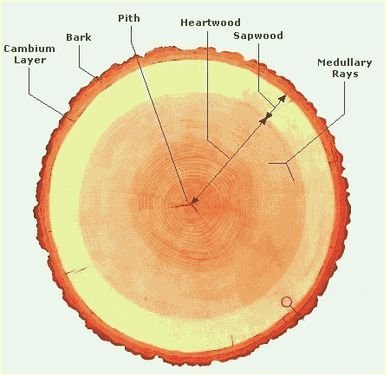
Using logs from a dead or unhealthy tree will either lower your yields or
prevent production altogether. It is best to inoculate logs in early spring if
they have been cut during the winter. You can usually begin to inoculate logs
one month before the average last frost date as long as day-time temperatures
are above 40o F.
If you cut logs during summer, it is best to inoculate them within 3 weeks after
they have been cut so that the logs will still have an adequate moisture
content. After inoculation, the logs are just placed in a shady place out of the
wind.
After inoculation, the logs are just placed in a shady place out of the
wind. The logs must be maintained in an environment above 40 percent moisture
and kept fully shaded in the summer. Under natural conditions, mushrooms
fruit in the spring and fall when temperatures are cool.
Logs generally begin producing 6 months to 1 year after inoculation; after
which, they usually continue to fruit for up to 4 years producing 1-2 lbs. per year.
Mushroom production
depends on the depth of the cambium and sapwood and environmental conditions.
The timing of mushroom production
in nature depends on both temperature and the timing of rain. Once a log has
“flushed” (produced a crop of mushrooms), it should be allowed to “rest” for at
least 10 to 12 weeks to provide the mycelium (roots) time to replenish the energy
required for fruiting.
Each log usually produces 2.5 lb - 4 lb over
its lifetime. For inoculation, you will need a drill with a 5/16 inch drill bit,
a hammer and cheese wax.
Step 1
Drill 1 ¼ in. deep holes into the log spacing the holes about 6 - 8 in. apart
within a row. Leave approximately 2 to 4 in. between the rows and offset the holes so
that they form a hexagonal pattern. A 4 in. diameter log will need 6 rows; a 5
in. diameter log will need 7, and a 6 in. diameter log will need 9 rows. A 4 in.
log usually is given about 40 - 50 plugs. The more plugs
you use per log, the faster the wood will be colonized with mushroom mycelium.
A large stump usually requires 100 holes arranged in a similar hexagonal fashion
around the trunk and with holes on the top of the stump as well. All mushrooms
are inoculated into logs in the same way.
Step 2
Hammer/Tap the plugs into the holes.
Step 3
Cover the plugs with the cheese wax. To do this, melt the wax in a pan which can
be maintained at 300o F. An electric frying pan with a thermostat control works
well for this.
If inoculating away from electricity, using a camp stove, make sure that the wax
is hot when you apply it; otherwise, the wax will not create a tight seal and
can easily fall off. The wax can be applied with a foam paint brush or cotton
dauber.
Mushrooms can also easily be grown on a small scale for home consumption in a
highly productive backyard mushroom garden with just a few logs.
By inoculating just 10 logs each year, one can harvest up to 25 pounds of fresh
mushrooms each year.
The total number
of mushrooms you can expect to get on each log or stump will vary from log to
log, from season to season and from year to year. Approximately 100 plugs are needed to inoculate 3 logs.
COMPLETE INSTRUCTIONS WILL BE INCLUDED WITH YOUR ORDER
For details on log cultivation see:
Growing
Shiitake Mushrooms in an Agroforestry Practice (PDF)
PRODUCING SHIITAKE MUSHROOMS: A GUIDE FOR SMALL-SCALE OUTDOOR
CULTIVATION ON LOGS (PDF)
A Guide to
Outdoor Mushroom Log Cultivation: Highlighting shiitake, reishi, and tree oyster
mushrooms (PDF)
Return to Top
WE GUARANTEE THAT THE PLUG SPAWN YOU RECEIVE WILL
BE VIABLE. and CAPABLE OF PRODUCING MUSHROOMS. WE CAREFULLY CHECK EACH STRAIN OF
SPAWN WE DISTRIBUTE.
The
total number of mushrooms you can expect to get on each log may vary from log to
log, and will depend on your care of the logs and environmental conditions.

VISA - MASTER CARD - DISCOVER - AMERICAN EXPRESS
Gourmet Mushrooms & Mushroom Products
GMHP, P. O. Box 515 IP, Graton, CA 95444
- -
VISA - MASTER CARD - DISCOVER - AMERICAN EXPRESS
E-mail gourmet@gmushrooms.com

Copyright © 2002 - 2021
|

